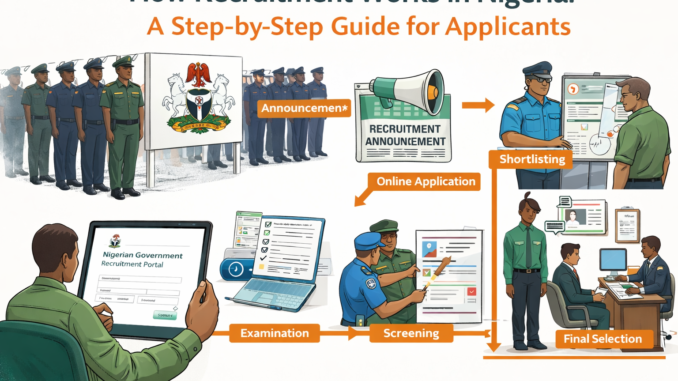
Finding a job in Nigeria can feel overwhelming, especially with the numerous recruitment processes across federal, state, and private organizations. Knowing how recruitment works and following the right steps can significantly improve your chances of success. This guide provides a step-by-step walkthrough for Nigerian job applicants to navigate recruitment processes efficiently.
Step 1: Identify Job Opportunities
The first step in any recruitment process is knowing where to look for available positions. Nigerian organizations post vacancies in different ways:
- Official company websites – Many organizations, such as the Nigerian Police Force (NPF) or Federal Civil Service, post job vacancies directly on their websites. Always rely on official portals to avoid scams.
- Job boards – Platforms like Jobberman, MyJobMag, or Indeed often list verified job openings.
- Social media – Follow company pages on LinkedIn, Twitter, or Facebook for real-time recruitment updates.
- Recruitment agencies – Some agencies assist in connecting applicants with employers, but ensure they are licensed and reputable.
Tip: Avoid applying through suspicious links or unofficial portals. Scammers often impersonate organizations to collect personal information.
Step 2: Read the Job Requirements Carefully
Once you identify a job opening, read the recruitment advertisement thoroughly. Most rejections occur because applicants do not meet basic requirements. Pay attention to:
- Educational qualifications – Some jobs require specific degrees or certifications.
- Experience – Check if the position requires years of experience or specific skills.
- Age limits – Certain government positions have age restrictions.
- Other prerequisites – This may include health certificates, identification numbers, or professional licenses.
Tip: Only apply for positions you are fully qualified for. Applying to jobs without meeting requirements wastes your time and reduces your success rate.
Step 3: Prepare Your Documents
Recruitment processes in Nigeria often require several documents. Commonly requested documents include:
- Curriculum Vitae (CV) – Your CV should be updated, concise, and tailored to the job. Include personal details, education, work experience, skills, and references.
- Cover Letter – Write a professional cover letter highlighting why you are suitable for the role.
- Educational Certificates – Include your degrees, diplomas, or relevant certifications.
- Identification – National ID, driver’s license, or International Passport may be required.
- Experience Letters – For experienced roles, provide letters from previous employers.
Tip: Scan all documents clearly and ensure they are formatted according to the employer’s requirements.
Step 4: Application Submission
- Once your documents are ready, submit your application properly. Most organizations in Nigeria now use online application portals.
- Online submission – Fill out the application form carefully, attach all required documents, and double-check your entries.
- Email submission – If applying via email, ensure the subject line follows the instructions in the advert. Attach all documents in PDF format unless specified otherwise.
- Physical submission – Some organizations may still require printed applications. Use clear, professional packaging.
Tip: Submit your application before the closing date. Late submissions are automatically disqualified.
Step 5: Screening Process
After submission, organizations often conduct a screening process to shortlist applicants. This may involve:
- Document verification – Confirming your qualifications and eligibility.
- Screening tests – Some positions require written exams, aptitude tests, or computer-based assessments.
- Shortlisting – Only qualified candidates are invited for interviews.
Tip: Keep a copy of your submitted documents, as you may be asked to provide them again during the screening process.
Step 6: Interviews and Assessment
Most recruitment processes in Nigeria include an interview stage. Types of interviews may include:
- Panel interview – You are interviewed by multiple officials from the organization.
- One-on-one interview – Direct interview with your potential supervisor.
- Psychometric or skill assessments – Evaluates personality traits or technical skills.
Tips for interview success:
- Research the organization thoroughly.
- Dress professionally.
- Arrive on time and bring necessary documents.
- Practice answering common interview questions confidently.
Step 7: Final Selection
After interviews, organizations will select the successful candidates. The process may include:
- Background checks – Verification of your education, work experience, and references.
- Medical examinations – Some positions require health clearance.
- Offer letter – Official communication stating your appointment and conditions of employment.
Tip: Be patient. Some organizations take weeks or months to complete this stage.
Step 8: Onboarding and Orientation
Once selected, the organization usually provides orientation and onboarding. This includes:
- Understanding organizational rules and policies.
- Signing contracts or employment agreements.
- Attending training or induction sessions.
Tip: Take notes during onboarding and ask questions if anything is unclear. This sets you up for success in your new role.
Tips to Increase Your Recruitment Success in Nigeria
- Network – Connect with professionals in your field on LinkedIn or attend job fairs.
- Stay updated – Follow official portals, recruitment blogs, and social media pages.
- Improve your skills – Take relevant courses or certifications to enhance your profile.
- Prepare for tests and interviews – Practice aptitude tests and common interview questions.
- Keep copies of all applications – Track your submissions to follow up if necessary.
Common Recruitment Mistakes Nigerian Applicants Make and How to Avoid Them
Conclusion
Navigating recruitment in Nigeria can be challenging, but understanding the step-by-step process gives applicants a significant advantage. From finding job openings, preparing documents, applying properly, to passing screening tests and interviews, each stage requires attention to detail and preparation. By avoiding common mistakes and focusing on continuous learning and professional development, applicants can increase their chances of securing their desired positions.
Following this guide ensures you approach recruitment strategically, stay organized, and demonstrate professionalism to potential employers.
Leave a Reply