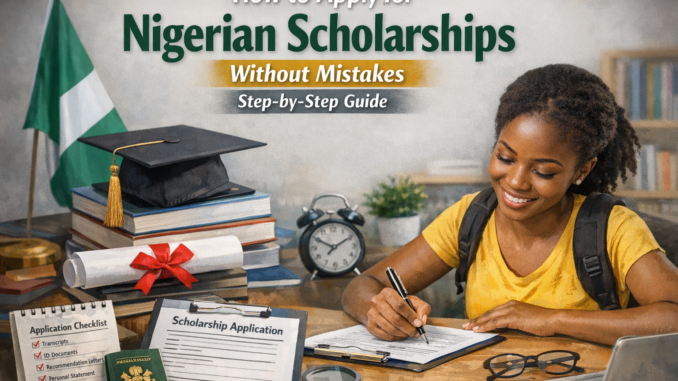
Scholarships are an excellent opportunity for Nigerian students to pursue higher education without financial burden. However, applying for scholarships can be tricky, especially for first-time applicants. A small mistake in the application process can reduce your chances of success. This guide provides practical Nigerian scholarship application tips, helping students apply correctly and maximize their chances of winning scholarships.
1. Understanding the Different Types of Scholarships in Nigeria
Before applying, it’s important to understand the types of scholarships available:
A. Government Scholarships
- Offered by federal or state governments
- Typically fully funded or partially funded
- Examples: Tertiary Education Trust Fund (TETFund), Nigerian Federal Government Scholarships
B. University Scholarships
- Offered by Nigerian universities to attract top-performing students
- Can be merit-based, need-based, or department-specific
C. International Scholarships
- Offered by foreign governments or organizations to Nigerian students
- Fully funded programs like Chevening, DAAD, Commonwealth Scholarships
D. Private/NGO Scholarships
- Offered by foundations, companies, or NGOs
- May target specific fields, communities, or underprivileged students
Tip: Always check the eligibility criteria before applying.
2. Common Mistakes Nigerian Students Make When Applying for Scholarships
Many Nigerian students unknowingly make mistakes that disqualify them. Here’s what to avoid:
- Missing Deadlines – Keep track of submission dates. Late applications are often rejected automatically.
- Incomplete Documents – Always submit all required documents: certificates, transcripts, letters of recommendation, etc.
- Ignoring Eligibility Requirements – Applying when you don’t meet the criteria is a waste of time.
- Poorly Written Personal Statements – This is often the deciding factor; avoid generic statements.
- Not Following Instructions – If the scholarship requires PDFs only, don’t submit Word docs.
3. Step-by-Step Guide to Applying for Nigerian Scholarships
Follow these steps carefully to ensure your application is complete and error-free.
Step 1: Research Scholarships Thoroughly
- Use official portals, university websites, and verified scholarship platforms
- Read terms and eligibility criteria carefully
- Take note of application deadlines, required documents, and submission methods
Tip: Maintain a spreadsheet to track all scholarships you plan to apply for.
Step 2: Gather Required Documents
Typical documents include:
- Academic transcripts and certificates
- Personal identification (e.g., National ID, International Passport, or Birth Certificate)
- Letters of recommendation (usually 2–3)
- Passport-sized photograph
- Personal statement or essay
Pro Tip: Scan all documents clearly and ensure they are legible.
Step 3: Prepare a Strong Personal Statement
Your personal statement is critical. To write an effective one:
- Clearly explain why you deserve the scholarship
- Highlight achievements, skills, and goals
- Keep it concise (usually 500–1000 words)
- Avoid generic phrases like “I am hardworking” without evidence
Example:
“I am passionate about environmental science and have volunteered in 3 local conservation projects. With this scholarship, I aim to pursue a master’s degree in environmental policy to contribute to sustainable development in Nigeria.”
Step 4: Get Quality Recommendation Letters
- Ask teachers, lecturers, or employers who know you well professionally or academically
- Provide them with your CV and details about the scholarship
- Give them enough time to write and submit
Tip: Ensure letters are specific, professional, and highlight your achievements.
Step 5: Fill Out the Application Form Carefully
- Double-check your name spelling, date of birth, and contact information
- Follow the application instructions precisely (e.g., format, file size)
- Avoid leaving sections blank; if not applicable, write “N/A”
Step 6: Proofread Everything
Before submitting:
- Check all documents for spelling and grammar errors
- Ensure attachments are correct and in the right format
- Ask a trusted friend or mentor to review your application
Step 7: Submit Before the Deadline
- Submit early to avoid last-minute technical issues
- Save confirmation emails or submission receipts
- If applying online, ensure your internet connection is stable
4. Tips to Increase Your Chances of Winning Scholarships
- Apply to Multiple Scholarships – Don’t rely on just one.
- Tailor Your Applications – Align your personal statement with the scholarship’s goals.
- Show Impact – Highlight contributions to your community or field.
- Maintain Academic Excellence – Many scholarships prioritize high academic performance.
- Follow Up – Politely check if your application was received if allowed.
5. Common Scholarship Red Flags in Nigeria
Be cautious of scams or unverified offers:
- Requests for money to process applications
- Unofficial emails from unknown sources
- Offers without official website verification
Tip: Always confirm with official scholarship portals before submitting any personal information.
6. Scholarship Application Checklist
Before submitting, ensure you have:
- Read and understood eligibility requirements
- Gathered all required documents
- Written a strong personal statement
- Obtained quality recommendation letters
- Completed the application form carefully
- Proofread everything
- Submitted before the deadline
7. How to Stay Updated on Scholarship Opportunities
- Join verified scholarship mailing lists
- Follow official social media accounts of universities and organizations
- Check Nigerian scholarship websites regularly
- Set reminders for deadlines and application updates
Top Tips to Make Your CV Stand Out in Nigeria: A Complete Guide for Job Seekers
9. Disclaimer
This article is for educational purposes only. Procedures and requirements for scholarships may vary depending on the organization or university. Always refer to official scholarship portals for complete and updated information.
Conclusion
Applying for scholarships in Nigeria does not have to be stressful. By researching carefully, gathering the right documents, writing strong personal statements, and avoiding common mistakes, students can maximize their chances of winning scholarships. Remember, attention to detail, honesty, and timely submissions are your keys to success.
Leave a Reply