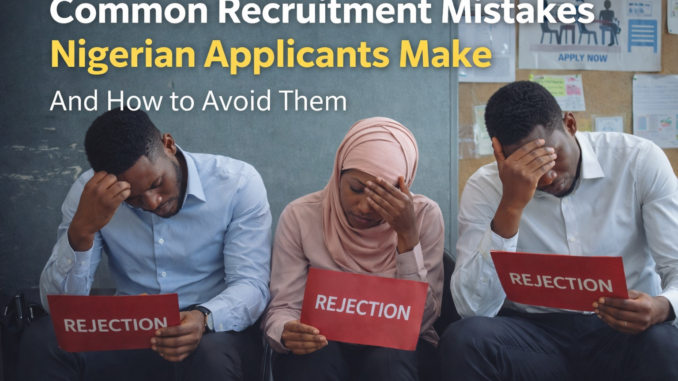
The process of applying for jobs in Nigeria can be stressful and competitive. Every year, thousands of applicants miss opportunities not because they lack qualifications but because of common mistakes that could have been avoided. Understanding these errors and how to prevent them can significantly increase your chances of landing your dream job. In this guide, we’ll cover the most frequent recruitment mistakes Nigerian applicants make and provide actionable tips to avoid them.
1. Not Researching the Company Before Applying
Many applicants apply to jobs without understanding the company’s values, culture, or requirements. This lack of research often shows during interviews and can result in automatic rejection.
How to Avoid:
- Visit the company’s website to learn about its mission, products, services, and recent news.
- Follow the company’s social media accounts to understand its culture and public image.
- Tailor your application to match the company’s values and expectations.
Tip: Even mentioning a specific recent achievement of the company during your interview can set you apart from other candidates.
2. Submitting Generic Resumes or Cover Letters
A common mistake is sending the same resume or cover letter to every job application. Generic applications rarely impress recruiters because they fail to highlight relevant skills and experiences.
How to Avoid:
- Customize your resume for each job by emphasizing skills and experiences relevant to the role.
- Write a unique cover letter addressing the specific position and company.
- Highlight measurable achievements rather than just listing responsibilities.
Example: Instead of saying, “I worked in sales,” say, “In my previous sales role, I increased revenue by 25% within six months by implementing a new customer engagement strategy.”
3. Ignoring Application Instructions
Recruiters provide instructions for a reason. Ignoring them, such as not submitting the required documents or using the wrong format, can result in your application being rejected automatically.
How to Avoid:
- Carefully read the job advert and follow every instruction.
- Submit documents in the correct format (PDF is usually preferred).
- Include all requested materials, such as references, transcripts, or certifications.
4. Providing Inaccurate or False Information
Some applicants exaggerate or falsify information to appear more qualified. While it may seem tempting, this can lead to disqualification or termination if discovered later.
How to Avoid:
- Always provide truthful information about your education, work experience, and skills.
- If you lack experience in a certain area, focus on transferable skills instead.
- Be prepared to back up all claims during interviews.
5. Poor Online Presence
Many Nigerian employers now check candidates’ social media profiles. Inappropriate posts, unprofessional photos, or negative comments can damage your chances.
How to Avoid:
- Clean up your social media profiles, removing offensive or inappropriate content.
- Set privacy settings to limit public access to personal posts.
- Maintain a professional online presence on platforms like LinkedIn.
6. Not Following Up After Applying
Failing to follow up after submitting an application can signal disinterest. Recruiters often appreciate a polite follow-up email to demonstrate enthusiasm.
How to Avoid:
- Send a follow-up email 5–7 days after submitting your application.
- Keep it short, professional, and polite, expressing your continued interest.
- Avoid pestering the recruiter with multiple messages.
7. Being Unprepared for Interviews
Even qualified applicants often fail because they come to interviews unprepared. Common mistakes include not practicing answers, failing to ask questions, or arriving late.
How to Avoid:
- Research common interview questions for your role.
- Prepare your responses using the STAR method (Situation, Task, Action, Result).
- Dress appropriately and arrive at least 15–20 minutes early.
- Prepare thoughtful questions to ask the interviewer about the company or role.
8. Ignoring Soft Skills
Many applicants focus solely on qualifications and technical skills, ignoring soft skills like communication, teamwork, and problem-solving. Employers highly value these skills.
How to Avoid:
- Highlight examples where you demonstrated teamwork, leadership, or problem-solving in previous roles.
- Include soft skills in your resume and during interviews.
- Use real-life examples to prove your abilities.
9. Applying for Jobs You Don’t Qualify For
Some applicants send applications for positions they are clearly underqualified for, wasting both their time and the recruiter’s time.
How to Avoid:
- Carefully review job requirements before applying.
- Only apply for roles where you meet at least 70–80% of the qualifications.
- Consider internships or entry-level positions to gain experience for higher roles.
10. Lack of Attention to Detail
Spelling mistakes, grammatical errors, and formatting issues on your resume, cover letter, or application form can give recruiters a negative impression.
How to Avoid:
- Proofread your resume and cover letter multiple times.
- Ask a friend or mentor to review your documents.
- Use online tools like Grammarly to catch errors.
11. Relying Solely on Online Applications
While online applications are convenient, relying only on them reduces your chances of standing out. Networking is a powerful tool in Nigeria’s job market.
How to Avoid:
- Attend job fairs, seminars, and workshops to meet recruiters.
- Network with professionals in your field through LinkedIn or alumni associations.
- Ask for referrals from friends or former colleagues.
12. Being Impatient
Many applicants give up quickly if they don’t hear back immediately. Recruitment processes can take weeks or months, and impatience can result in rushed decisions or giving up on good opportunities.
How to Avoid:
- Be patient and track your applications.
- Continue applying to other roles while waiting.
- Stay positive and learn from each application experience.
READ ALSO: How Recruitment Works in Nigeria
Conclusion
Recruitment in Nigeria can be challenging, but avoiding common mistakes can significantly improve your chances. Focus on providing accurate information, quality applications, and professional behavior, both online and offline. By researching companies, customizing your applications, preparing for interviews, and maintaining engagement, you increase your chances of landing your desired job.
Remember, recruitment success is a combination of preparation, patience, and professionalism. Avoiding these mistakes is the first step toward a successful career.
Leave a Reply